Cyntara Cyntara

What Is an AI Training Server Manufacturer?

Time:2026-11-16 Author:Oliver
0%

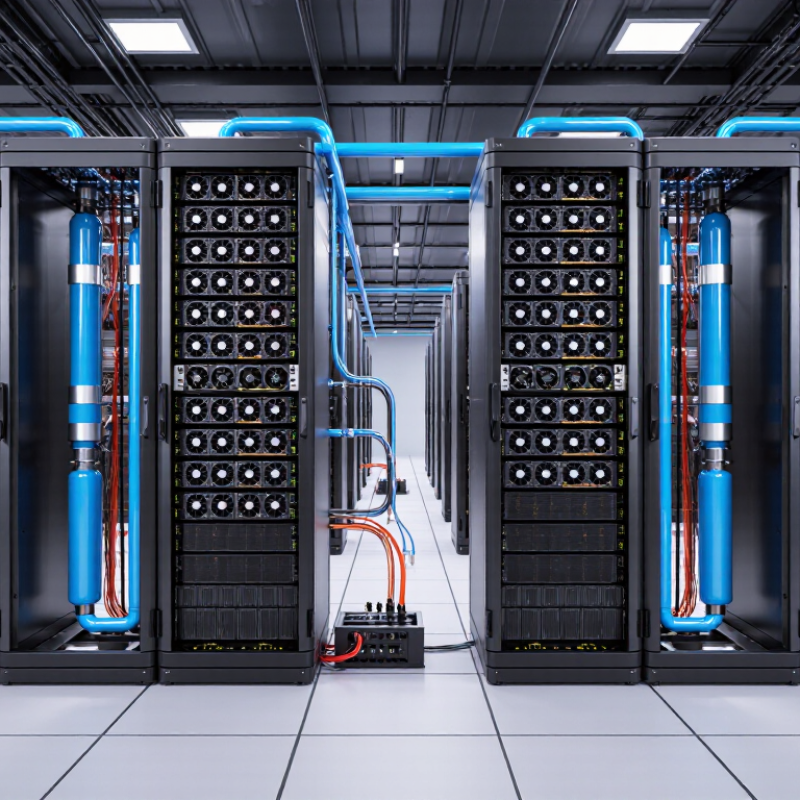
What does an ai training server manufacturer actually make? It designs and builds systems that process large datasets to train machine-learning models. A typical server may combine GPU accelerators, high-bandwidth memory, fast networking, power delivery, and liquid or air cooling. The manufacturer’s work extends beyond assembling components. It must validate how they perform together under sustained workloads, where heat, power limits, and network bottlenecks can constrain training.

The Stanford Institute for Human-Centered AI’s AI Index Report 2024 found that training compute for notable AI models doubled approximately every five months. That trend helps explain demand for denser, faster server platforms. The International Energy Agency’s Electricity 2024 report estimated that data centres used about 460 terawatt-hours of electricity worldwide in 2022, while forecasting substantial growth by 2026. That figure covers data centres broadly, not AI training alone. The distinction matters.

An ai training server manufacturer may therefore be assessed on more than peak accelerator performance. Buyers also need evidence on system stability, cooling design, service support, and energy use under realistic workloads. Ask for measured results, not just impressive specifications. That is not trivial. Even good benchmark data may fail to represent a customer’s actual models, data pipelines, or facility limits. A careful manufacturer explains those trade-offs instead of promising that one configuration fits every training task.
What Is an AI Training Server Manufacturer?

Defining an AI Training Server Manufacturer

What Is an AI Training Server Manufacturer?

Defining an AI Training Server Manufacturer

An AI training server manufacturer designs and builds systems for workloads that use large datasets and compute-intensive models. Its work goes beyond assembling parts. Engineers select processors, accelerators, memory, storage, and networking components that need to operate together under sustained load. A typical system may combine multiple accelerators, high-bandwidth memory, and fast connections between nodes. Small design choices matter.

Manufacturers also test how systems behave in practice. They may check cooling performance, power delivery, and stability during extended training runs. A server that looks powerful on a specification sheet can still struggle if airflow is restricted or components throttle under heat. Testing helps reveal those limits, though no single test predicts every customer’s environment. Real deployments vary.

A manufacturer may provide configuration guidance, firmware updates, and technical support after delivery. Clear documentation matters when teams need to install servers in a rack, connect them to a network, or diagnose a failed component. Buyers should ask how a system was validated and which workloads it suits. The label alone is not enough. It is easy to focus on peak performance and overlook maintenance, noise, or energy use. That trade-off deserves a second look.

Core Components of AI Training Servers

An AI training server combines accelerators, processors, memory, storage, networking, and power systems. Its accelerators perform most of the matrix calculations used to train models. The CPU coordinates data movement and system tasks. Fast memory keeps frequently used data close to the accelerators. Capacity matters, but so does bandwidth. A large memory pool can still become a bottleneck if data arrives too slowly. That detail is easy to miss.

Storage feeds training data into the server, while high-speed network links connect multiple machines for distributed workloads. Inside the chassis, the motherboard and interconnects determine how well components communicate. Cooling must remove heat from densely packed processors and accelerators. Airflow paths, fan placement, and power delivery need testing under sustained load, not just brief benchmarks. Noise and maintenance access matter too. They are not glamorous, but technicians notice them quickly.

Tips: Match accelerator memory to model size and workload. Check sustained performance, temperatures, and network throughput together. Ask for test results from realistic workloads. Specs help, but they do not tell the whole story. Even careful plans can need adjustment after deployment.

How Manufacturers Design and Build AI Systems

An AI training server manufacturer does more than assemble powerful components. It designs a system that can sustain demanding workloads without overheating, throttling, or becoming difficult to service. Engineers start with the model’s needs: accelerator count, memory capacity, data movement, and expected power draw. Those choices shape the chassis, motherboard layout, network links, and cooling plan.

In a rack, airflow is physical, not theoretical. A blocked vent or poorly routed cable can raise temperatures across several machines. Manufacturers test fan curves, liquid-cooling loops, power delivery, and accelerator communication under sustained loads. They also check firmware settings and component compatibility, since a server that boots successfully may still perform inconsistently during long training runs. Small details matter.

Before shipment, systems should undergo burn-in tests, thermal checks, and workload simulations. Test records help buyers compare expected performance with observed results. Yet no lab can reproduce every data center’s room temperature, power quality, or maintenance routine. A layout that looks clean on paper can prove awkward to repair, and manufacturers should treat that as useful feedback, not a minor footnote. An honest design process includes documenting limits, service access, and the conditions behind performance claims.

What Is an AI Training Server Manufacturer?

How manufacturers design and build AI systems—balancing compute, memory, networking, power delivery, and cooling.

Illustrative power budget for an 8-accelerator training server. The accelerator and CPU figures use example rated power assumptions (8 × 700 W and 2 × 350 W); other figures are indicative design estimates. Actual power varies by hardware configuration and workload.

Key Capabilities Used to Compare Manufacturers

An AI training server manufacturer should be judged by how well it combines compute, memory, storage, and networking. Ask whether its systems support the accelerator types and quantities your workloads require. Check power delivery and cooling details, too. A densely packed rack can run hot. Clear airflow diagrams and power estimates are more useful than broad performance claims.

Look for engineering and validation capabilities. Manufacturers should explain how they test thermal behavior, component compatibility, and system stability under sustained workloads. Ask for configuration-specific test results, not just figures from a different build. Practical details matter: cable routing, service access, and replacement procedures can affect uptime. Small omissions add up.

Support is another key measure. Check whether engineers can help size a system from actual model, dataset, and throughput needs. Review warranty terms, spare-parts arrangements, firmware update processes, and response targets. No scorecard is perfect. A short benchmark may not predict performance on your workload, and published results can hide configuration differences. Request a clearly documented bill of materials and test setup, then compare like with like. Manufacturers that explain limitations plainly are easier to assess than those relying on impressive but incomplete numbers.

Industries and Workloads Served by Manufacturers

An AI training server manufacturer designs and integrates computing systems for organizations that train machine-learning models. Its customers include university research teams, hospitals, manufacturers, financial firms, and climate scientists. Their workloads differ: a hospital may process medical images, while a factory may train models to spot defects in production-line footage. Some projects need many accelerators working together; others need fast storage and reliable data movement. The Stanford Institute for Human-Centered AI’s 2024 AI Index Report found that training compute for notable AI models has doubled about every five months. That pace puts pressure on system design, power delivery, cooling, and network capacity.

Heat is real.

Manufacturers also support language-model training, scientific simulation, recommendation systems, and fine-tuning models for specialized tasks. The International Energy Agency’s Electricity 2024 report estimated data centers used about 460 terawatt-hours of electricity in 2022, with demand potentially exceeding 1,000 terawatt-hours by 2026. That estimate covers data centers broadly, not training servers alone, but it highlights the value of efficient infrastructure. A manufacturer may configure liquid cooling for dense compute racks or air cooling for smaller installations. The right choice depends on workload, facility limits, and operating costs. No configuration is perfect; teams can still underestimate future cooling needs or data bottlenecks.

FAQS

What are the main components of an AI training server?

It combines accelerators, processors, memory, storage, networking, cooling, and power systems. Each part affects overall performance.

Why does memory bandwidth matter during model training?

Accelerators need data quickly. Large memory capacity alone may not prevent a bottleneck.

What should buyers check about cooling?

Check airflow, fan placement, temperatures, and cooling performance during sustained workloads. Brief tests can miss problems.

Why do network links matter in multi-server training?

Fast links help machines exchange data during distributed workloads. Check network throughput alongside accelerator performance.

How do manufacturers test an AI training server?

They can run burn-in tests, thermal checks, and workload simulations before shipment. Test records make results easier to compare.

Why can a server perform differently after deployment?

Data center temperature, power quality, and maintenance routines vary. Lab results cannot capture every condition.

What details affect server maintenance?

Cable routing and service access matter. A crowded chassis can make a simple repair awkward.

Are specifications enough to predict real-world performance?

No. Specs are not enough. Ask for realistic workload results, and stay open to adjustments after deployment.

Conclusion

An ai training server manufacturer designs and builds computing systems optimized for developing and training artificial intelligence models. These servers combine high-performance processors, accelerators, memory, storage, networking, and power and cooling solutions. Each component must work together to handle demanding calculations, move large datasets efficiently, and maintain reliable operation during extended workloads.

Manufacturers plan systems around performance, scalability, compatibility, energy use, and serviceability. Their work can include selecting components, integrating hardware, testing system stability, and configuring solutions for different environments. Comparing manufacturers involves considering compute capacity, memory and storage options, network speed, cooling design, expandability, and technical support. Their systems serve a range of industries and workloads, including model development, scientific research, data analysis, and other applications that require intensive computing.

Oliver

Oliver

Oliver is a seasoned marketing professional with a wealth of expertise in driving brand awareness and engagement. With a deep understanding of our company's product offerings, he consistently delivers high-quality content that enriches our professional blog. His insights not only shed light on......