Cyntara Cyntara

How to Choose an Artificial Intelligence Server Manufacturer?

Time:2026-09-10 Author:Madeline
0%

Choosing an artificial intelligence server manufacturer requires more than comparing GPU prices. The decision affects model training speed, data protection, energy use, and long-term operating costs. A reliable evaluation should begin with your workloads, not a vendor’s marketing promises. Define model sizes, batch demands, storage needs, network traffic, and expected growth. Then ask whether each proposed system handles those conditions consistently.

Experienced IT teams inspect thermal design, power redundancy, firmware quality, and component traceability. They also review benchmark methods, because impressive results can hide unsuitable configurations. A server tested with one model may perform differently under your production pipeline. Request documented test conditions, including software versions, cooling settings, and utilization levels. Check security controls, warranty terms, repair procedures, and the availability of trained support engineers. Independent certifications and customer references can strengthen confidence, but neither replaces technical validation.

Ask for a pilot installation when possible. Measure it directly. There is no perfect manufacturer for every organization. A smaller supplier may offer flexibility, while a global provider may provide broader logistics. Both options can fail without clear communication and accountable service agreements. Examine response times during a fault, not only polished sales presentations. Calculate electricity and cooling costs over three years, too. That step is often overlooked. The final choice should balance verified performance, engineering expertise, transparent support, and realistic risk. Leave room for doubt, because hardware decisions can age faster than expected.
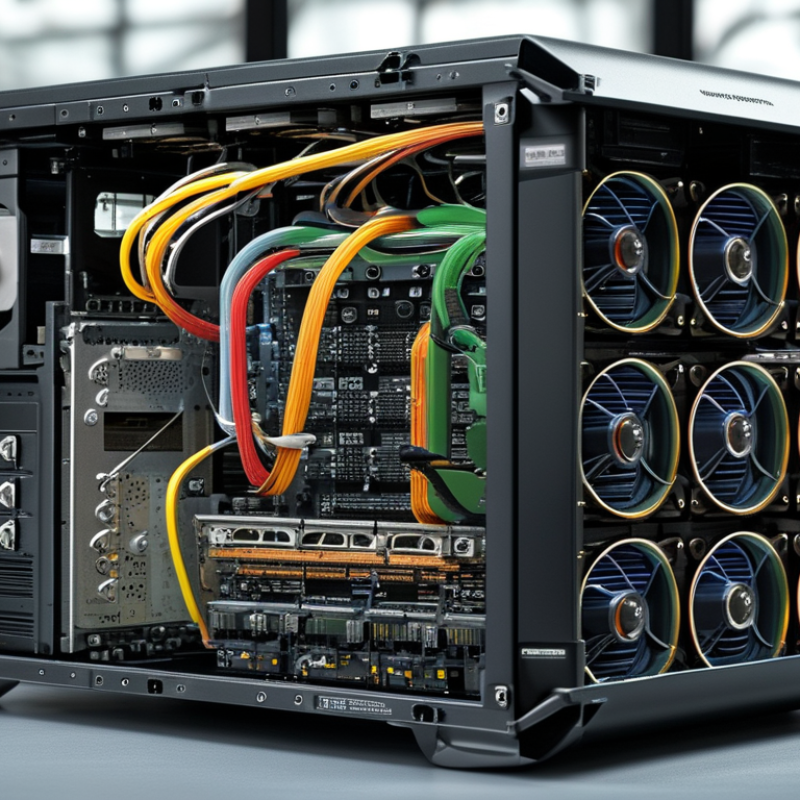
How to Choose an Artificial Intelligence Server Manufacturer?

Define the Role and Requirements of an Artificial Intelligence Server

How to Choose an Artificial Intelligence Server Manufacturer?

Define the Role and Requirements of an Artificial Intelligence Server

An artificial intelligence server is the working core of a data pipeline. It trains models, runs inference, and processes large datasets under strict time limits. Define its role before comparing manufacturers. A training server may need multiple accelerators, high memory capacity, fast storage, and strong internal networking. An inference server may prioritize low latency, stable uptime, and efficient power usage.

Start with measurable requirements. Record model size, dataset volume, expected users, response time, and daily workload. Check supported numerical precision, expansion options, cooling capacity, and rack dimensions. Power consumption matters. A server that performs well in a laboratory may overload a facility’s cooling system. That mistake is expensive.

I have found that benchmark results can mislead when test conditions remain unclear. Request workload-based testing with your own models or similar data. Review firmware updates, diagnostic tools, warranty terms, and replacement procedures. Confirm the manufacturer’s experience with accelerator compatibility and operating system integration. Documentation should explain installation, monitoring, and fault recovery in plain language. Security also deserves attention, including controlled access, encrypted management channels, and audit records. A perfect specification rarely exists. Leave room for growth, but avoid paying for unused capacity. Reliable decisions come from measured requirements, transparent testing, and support that remains available after delivery.

Compare Manufacturer Expertise, Product Design, and AI Compatibility

How to Choose an Artificial Intelligence Server Manufacturer?

Compare Manufacturer Expertise, Product Design, and AI Compatibility

Choosing an artificial intelligence server manufacturer requires more than comparing processor counts. Examine its experience with real AI deployments, not only laboratory demonstrations. Ask for documented thermal tests, workload results, and failure-rate data. A capable manufacturer should explain cooling limits, power behavior, and expansion options in clear language.

Product design reveals practical competence. Check whether the chassis supports enough GPUs, high-speed networking, and reliable storage. Inspect airflow paths and service access. A crowded rack can become a maintenance problem. Review memory capacity, PCIe layout, power redundancy, and remote-management controls. Request firmware update procedures and replacement timelines. Small details matter.

AI compatibility must match your actual workload. Training large models may require dense accelerators, fast interconnects, and substantial memory bandwidth. Inference systems may prioritize latency, energy efficiency, and compact deployment. Ask whether the manufacturer validates common frameworks, drivers, virtualization tools, and container environments. Compatibility claims should include version numbers and test conditions. Vague promises are weak evidence.

During one evaluation, a powerful configuration looked ideal on paper but performed poorly under sustained heat. That changed my selection criteria. I now request extended-load testing before approval. I also compare warranty terms, technical support hours, and published service procedures. No manufacturer gets everything right. A transparent team that admits limitations may prove more reliable than one offering flawless claims.

Evaluate Performance, Scalability, and Hardware Customization Options

Choosing an artificial intelligence server manufacturer requires more than comparing processor counts. Start with your actual workload, such as model training, inference, or image processing. A suitable system should balance accelerators, CPU performance, memory capacity, storage speed, and network bandwidth. Measure real tasks. Ask for benchmark results using similar model sizes and datasets, not only peak theoretical performance.

Scalability matters when a single server no longer meets demand. Check whether the platform supports additional accelerators, memory upgrades, faster networking, and shared storage connections. Rack dimensions, power availability, and cooling capacity also affect expansion. Hardware customization can improve efficiency, especially when workloads require unusual memory ratios or dense storage. However, excessive customization may increase delivery time and complicate maintenance. The manufacturer should explain these trade-offs clearly.

Reliability depends on more than hardware specifications. Evaluate thermal testing, firmware control, component validation, remote monitoring, and replacement procedures. Request documented service-level commitments and clear warranty terms. In practice, I have seen systems perform well in short tests but throttle during overnight workloads because cooling assumptions were too optimistic. That experience changed how I review airflow measurements and sustained-performance data. Ask for a pilot unit when possible. It can reveal noise, heat, software compatibility, and installation problems before a larger purchase. Mistakes still happen, but transparent testing makes them easier to manage.

How to Choose an Artificial Intelligence Server Manufacturer? — Evaluate Performance, Scalability, and Hardware Customization Options
Evaluation Dimension What to Verify Typical Enterprise Server Range Why It Matters for AI Workloads Evaluation Priority Recommended Manufacturer Questions
Accelerator Support Number of accelerator slots, slot spacing, PCIe generation, power delivery, and support for single- or double-width cards. 1–8 accelerator cards in a single server, depending on chassis size, thermal design, and power budget. Accelerators usually determine training and inference throughput. Insufficient airflow, slot spacing, or power capacity can limit usable performance. Very High Which accelerator form factors are validated? What is the maximum sustained power per slot? Are all slots able to operate at full bandwidth simultaneously?
CPU and Host Processing Processor generation, socket count, core count, memory channels, PCIe lanes, and support for virtualization. 1–2 processor sockets with current server-class CPUs and approximately 16–128 physical cores per system, depending on configuration. CPUs handle data preparation, orchestration, preprocessing, storage services, and workloads that do not run on accelerators. Very High How many PCIe lanes remain available after installing accelerators and storage controllers? Can the system support the required CPU-to-accelerator topology?
Memory Capacity and Bandwidth Maximum supported memory, memory type, channel population rules, error correction, and upgrade path. Approximately 256 GB to 4 TB of ECC server memory; larger capacities may be available in specialized platforms. Large datasets, model checkpoints, vector databases, and preprocessing pipelines can become memory-bound even when accelerator capacity is sufficient. Very High What is the maximum validated memory capacity? Can memory be expanded without replacing existing modules? Are performance penalties caused by partially populated channels?
Interconnect and Networking Internal accelerator links, PCIe topology, network speed, port count, latency, and support for remote direct memory access. 25–100 GbE is common for demanding deployments; 200 GbE or higher may be used for distributed training and scale-out clusters. Distributed AI training and shared storage depend on high bandwidth and low latency. Poor topology can create communication bottlenecks. Very High What network adapters and fabrics are supported? Can the manufacturer provide topology diagrams, latency measurements, and multi-node validation results?
Storage Performance NVMe drive bays, boot-device redundancy, local scratch capacity, storage controller design, and support for shared storage. 2–24 or more NVMe drives, with capacities commonly ranging from 1.92 TB to 15.36 TB per enterprise drive. Fast local storage reduces dataset loading time, checkpoint delays, and temporary-file contention during training and inference. High How many drives can operate at full PCIe bandwidth? Is the operating system isolated from high-throughput training data? Are redundant boot options available?
Thermal and Power Design Power supply capacity, redundancy, airflow direction, fan control, operating temperature range, and acoustic limits. Redundant power supplies are common; high-density accelerator systems may require several kilowatts of available power per chassis. AI workloads often run at sustained high utilization. Thermal throttling can reduce real-world throughput and shorten component life. Very High What is the sustained workload temperature profile? Does the system maintain rated performance under continuous training? What cooling options are available?
Scalability Expansion slots, additional drive bays, memory headroom, cluster integration, rack compatibility, and management architecture. Scale-up systems may expand within one chassis, while scale-out deployments can connect many nodes through high-speed networking. Scalability protects the initial investment as models, datasets, and user demand grow. High Which components can be upgraded later? Can additional nodes use the same management tools, firmware standards, and rack infrastructure?
Hardware Customization Choice of CPU, memory, accelerators, storage, network adapters, chassis, power supplies, and firmware settings. Customization commonly ranges from standard configuration changes to validated bespoke designs for specialized workloads. Custom designs can improve total cost of ownership, but non-standard components may increase validation time and support complexity. High Which components can be customized without invalidating support? Are custom configurations tested as complete systems rather than as separate parts?
Benchmark Transparency Benchmark methodology, software versions, dataset characteristics, batch sizes, precision modes, and power conditions. Useful results should report throughput, latency, utilization, power draw, and test configuration rather than a single peak score. Comparable, reproducible measurements reveal whether performance claims reflect practical workloads or ideal laboratory conditions. High Can you provide reproducible results for our model type? Were measurements taken at sustained load? Are software, driver, and firmware versions documented?
Management and Monitoring Out-of-band management, remote console, firmware updates, telemetry, hardware alerts, and compatibility with existing monitoring systems. Enterprise platforms commonly provide dedicated management controllers, remote power control, sensor monitoring, and event logging. Effective monitoring reduces downtime and helps identify thermal, power, memory, storage, and accelerator faults quickly. High Which metrics are exposed through standard interfaces? Can firmware updates be staged centrally? Is remote troubleshooting available without physical access?
Reliability and Serviceability Component qualification, redundant systems, hot-swap capability, spare-part availability, diagnostics, and repair procedures. Common enterprise features include ECC memory, redundant power supplies, hot-swappable drives, and replaceable fans. AI infrastructure often runs continuously. Faster diagnosis and replacement can reduce the operational impact of hardware failures. High What failure scenarios have been tested? Which parts are field-replaceable? What are the response times for critical hardware incidents?
Software and Firmware Validation Operating-system support, accelerator drivers, container runtimes, orchestration platforms, firmware compatibility, and update policy. Support should cover the intended operating system, container stack, accelerator software, monitoring tools, and security update process. Hardware performance depends on driver versions, libraries, kernels, firmware, and application configuration. High Which software stack combinations are validated? How are driver and firmware regressions handled? Are installation images or deployment guides provided?
Total Cost of Ownership Purchase price, energy consumption, cooling requirements, maintenance, warranty, software support, and future expansion costs. Energy and cooling costs can become a major part of operating expenses in high-density accelerator deployments. The lowest purchase price may not provide the lowest cost per training run or inference request. High Can you estimate three- to five-year operating costs using expected utilization? Are power draw, warranty, spare parts, and expansion costs included?
Security and Compliance Secure boot, hardware root of trust, firmware signing, role-based management, audit logging, and data-erasure procedures. Enterprise systems may support secure boot, signed firmware, hardware-based security features, and centralized access controls. AI servers may process confidential training data, proprietary models, and personally identifiable information. High How are firmware images authenticated? Can management access be integrated with centralized identity systems? What is the process for securely erasing replaced drives?

Note: The ranges shown are representative industry configurations rather than quotations or guarantees. Actual performance and capacity depend on the selected processor, accelerator, memory population, storage devices, software stack, workload, cooling system, and power limits.

Review Reliability, Security, Support, and Total Ownership Costs

Choosing an artificial intelligence server manufacturer requires more than comparing processor speed or memory capacity. Reliability should be measured through documented failure rates, component testing, and realistic workload trials. Ask whether the manufacturer validates systems under sustained heat, high memory use, and continuous model training. A server that performs well for two hours may struggle after several weeks. Request service records, warranty terms, and replacement timelines. Small details matter, such as accessible drive bays and clear diagnostic lights.

Security must cover the entire server lifecycle. Look for secure boot, firmware verification, role-based access, and encrypted management channels. Confirm how security updates are delivered and how long they remain available. Support quality is equally practical. Test the support process before purchasing. Can an engineer explain a failed accelerator log at 2 a.m.? Are spare parts stored near your operating region? Written escalation procedures are stronger than vague promises.

Tips: Calculate total ownership costs over three to five years. Include electricity, cooling, software licenses, maintenance, downtime, and technician hours. A cheaper server may consume more power in a crowded data room. Ask for a sample cost model. Then replace its optimistic assumptions with your own energy rates and workload data. I have seen estimates fail because they ignored installation delays and training interruptions. That possibility deserves attention. Also compare upgrade paths, resale limits, and disposal requirements before signing a contract.

Verify Manufacturer Credentials Through Testing, References, and Contracts

Choosing an artificial intelligence server manufacturer requires evidence beyond impressive specifications. Request certifications, audited quality procedures, and documented experience with comparable workloads. Check whether engineers can explain thermal limits, power redundancy, firmware control, and component traceability. Credentials should be verifiable through registration records, test reports, and customer references.

Testing must resemble your real environment. Require factory acceptance testing for compute performance, memory stability, network throughput, storage endurance, and sustained thermal behavior. Ask for results under full accelerator load, not only short benchmark bursts. The Uptime Institute’s 2024 Annual Outage Analysis reports that 54% of respondents experienced a recent outage costing at least $100,000. That figure makes burn-in testing and failure reporting commercially important. Still, benchmark results can mislead. A server may perform well for one workload and throttle during long training sessions.

References should include customers with similar rack density, cooling conditions, and support expectations. Ask about delivery accuracy, replacement times, firmware updates, and unresolved incidents. Speak with technical users, not only sales contacts. Contracts should define acceptance tests, warranty scope, response times, spare-part availability, cybersecurity duties, and return procedures. Include measurable remedies for missed service levels. The IBM Cost of a Data Breach Report 2024 places the global average breach cost at $4.88 million, reinforcing the need for clear security responsibilities. Some procurement teams overlook contract language. That is a costly weakness. Have legal and engineering reviewers challenge every vague promise before purchase.

How to Choose an Artificial Intelligence Server Manufacturer?

Use a balanced verification process before selecting a manufacturer. Technical testing confirms performance and reliability, customer references validate delivery experience, and contract reviews clarify warranty, service levels, and accountability.

FAQS

: How should I evaluate an artificial intelligence server manufacturer?

: Match the server to your actual workload. Test model training, inference, or image processing tasks. Compare similar model sizes and datasets. Peak performance alone can mislead.

Which hardware components affect server performance?

Review accelerators, CPUs, memory, storage, and network bandwidth together. A powerful accelerator may still wait for slow storage. Limited memory can reduce training efficiency. Balance matters.

Can the server scale as demand increases?

Check support for additional accelerators and memory upgrades. Confirm faster networking and shared storage connections. Measure rack space, power, and cooling capacity. Expansion needs physical room.

Is hardware customization always beneficial?

Custom memory ratios or dense storage can improve efficiency. However, unusual designs may delay delivery. They can also complicate maintenance and replacement. Ask for clear trade-offs.

How can I test long-term reliability?

Request thermal testing and sustained-performance data. Test continuous workloads, not only two-hour demonstrations. Watch for throttling during overnight operation. Short tests can flatter weak cooling designs.

What security features should a server include?

Look for secure boot and firmware verification. Role-based access helps limit administrative mistakes. Encrypted management channels protect remote operations. Confirm update delivery and support duration.

How should I judge technical support?

Test the support process before purchase. Ask how engineers handle failed accelerator logs. Review escalation procedures and replacement timelines. Nearby spare parts can reduce downtime. Vague promises are not enough.

How do I calculate total ownership costs?

Estimate electricity, cooling, software, maintenance, downtime, and technician hours. Use your own energy rates and workload data. Include installation delays and training interruptions. A lower purchase price may hide higher operating costs.

Should I request a pilot server?

Yes, when possible. A pilot can reveal noise, heat, and software compatibility problems. It may expose installation issues early. I once trusted short benchmarks too much. That judgment needed revision.

Conclusion

Choosing the right artificial intelligence server manufacturer requires more than comparing product prices. First, define the server’s intended role, workload, data volume, software environment, and future expansion needs. Then assess each manufacturer’s technical expertise, product architecture, AI compatibility, processing performance, scalability, and available hardware customization. A suitable solution should support current applications while remaining flexible enough for evolving models, increasing datasets, and changing operational requirements.

Reliability and security are equally important. Review component quality, system stability, data protection measures, warranty terms, technical support, maintenance services, energy efficiency, and total ownership costs. Before making a final decision, verify the manufacturer’s credentials through performance testing, customer references, technical documentation, and clearly defined contracts. By evaluating capabilities from both engineering and business perspectives, organizations can select an artificial intelligence server manufacturer that delivers dependable performance, long-term value, and a practical foundation for secure AI development.

Madeline

Madeline

Madeline is a dedicated marketing professional with a wealth of expertise in our company's core offerings. With a keen understanding of the industry, she brings a unique perspective to her role, consistently delivering high-quality content that highlights the superior aspects of our products. As......