Cyntara Cyntara

10 Tips to Choose a Data Center AI Server Manufacturer

Time:2026-10-26 Author:Madeline
0%

Choosing a data center AI server manufacturer is not a simple shopping decision. It affects performance, energy use, uptime, and future expansion. A powerful GPU means little if the chassis overheats or the support team responds slowly.

Jensen Huang, NVIDIA’s founder and CEO, once said, “The more you buy, the more you save.” That idea deserves careful reflection. Larger orders may reduce unit costs, but they can also magnify design mistakes. Buyers should examine GPU compatibility, rack density, liquid-cooling options, power delivery, networking, firmware control, and warranty coverage. A server that looks affordable may require expensive electrical upgrades or specialized maintenance.

This guide presents ten practical tips for evaluating a data center AI server manufacturer. It focuses on evidence, not impressive brochures. Ask for thermal test results, workload benchmarks, burn-in procedures, supply-chain details, and customer references. Request clear service-level commitments. Check whether engineers can support your preferred operating system and orchestration tools.

A perfect vendor does not exist.

Real evaluations often expose uncomfortable gaps. Some manufacturers offer excellent hardware but limited software support. Others provide responsive service but lack experience with dense AI clusters. Your decision should match the workload, facility, budget, and risk tolerance. Independent validation remains valuable, especially before a large deployment. A careful comparison can prevent unstable nodes, delayed projects, and wasted capital. Still, no checklist replaces direct testing in your own environment.
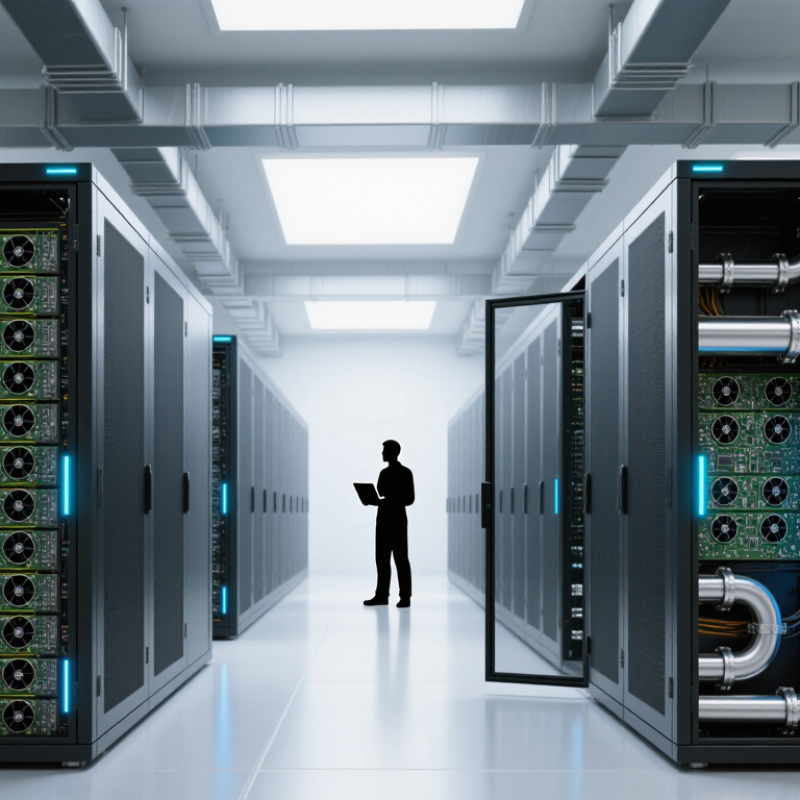
10 Tips to Choose a Data Center AI Server Manufacturer

Understanding Data Center AI Server Requirements

Understanding data center AI server requirements starts with power, heat, and workload behavior. The International Energy Agency reported that data centers consumed about 460 TWh globally in 2022. It expects demand to exceed 1,000 TWh by 2026. A suitable server manufacturer should therefore provide measured power data, not optimistic estimates. Ask for performance per watt, rack-level consumption, and cooling requirements under sustained training loads.

Tip: Define the workload before comparing hardware. Large model training needs high-bandwidth memory, fast interconnects, and predictable scaling. Inference may value lower latency, compact systems, and flexible scheduling. Uptime Institute’s 2024 survey found that power issues remain a leading cause of serious data center outages. Require redundant power paths, tested firmware, remote monitoring, and documented recovery procedures. Small details matter, such as cable airflow and service access.

Tip: Inspect the manufacturer’s evidence. Request independent benchmark results, thermal test conditions, noise measurements, and failure-rate data. The Omdia Data Center Compute Market Tracker shows continuing growth in accelerated computing demand, but procurement decisions should not follow market excitement blindly. I have seen teams overbuy expensive accelerators while underestimating storage and network bottlenecks. That mistake is easy to repeat. Leave room for imperfect forecasts, modular expansion, and technician access during a hot aisle service call.

Assessing Manufacturer Expertise and Product Capabilities

A capable data center AI server manufacturer should prove expertise beyond impressive specifications.

Ask for deployment records in comparable workloads, not generic laboratory claims. The International Energy Agency’s Electricity 2024 report estimates that data centers consumed about 460 TWh globally in 2022, with demand potentially exceeding 1,000 TWh by 2026. Power efficiency is no longer a minor feature.

Request evidence from real installations.

Can the manufacturer provide rack-level power readings, thermal maps, firmware update procedures, and failure-recovery times? During evaluation, inspect cable routing, airflow separation, liquid-cooling options, and service access. A strong engineering team explains why a design works under sustained accelerator loads. It also admits where it does not.

Benchmark results need context. Compare identical model versions, precision settings, batch sizes, and cooling conditions. Public MLPerf results can support this process, but they should not replace your own workload tests. Look for reproducible documentation, transparent configuration files, and independent validation.

Uptime Institute’s Global Data Center Survey consistently highlights operational resilience and outage prevention as major industry concerns. Therefore, ask about spare-part availability, remote diagnostics, technician coverage, and mean time to repair.

Do not ignore software capability.

Mature manufacturers coordinate hardware, drivers, orchestration tools, and security updates. Their engineers should understand GPU scheduling, memory bottlenecks, and network congestion. One overlooked limitation can erase a promising benchmark.

I would also request customer references. Reports can look perfect. Production is messier.

Comparing Performance, Scalability, and Energy Efficiency

10 Tips to Choose a Data Center AI Server Manufacturer

Comparing performance, scalability, and energy efficiency requires more than reading peak accelerator scores. Ask manufacturers for workload-specific benchmarks, including training time, inference latency, memory capacity, and interconnect bandwidth. Ten practical checks matter: sustained performance, thermal stability, accelerator compatibility, networking, storage speed, rack density, expansion paths, power delivery, service coverage, and total cost. Short demos can mislead.

Request results from repeatable tests, not screenshots. The MLPerf benchmarks provide useful methodology, but your models may behave differently. Measure tokens per second, jobs completed per kilowatt-hour, and performance after several hours. Watch the fans. A server that performs well for ten minutes may throttle inside a dense rack. I have seen theoretical scalability weaken when network traffic and cooling limits were ignored.

Energy efficiency deserves equal weight. The International Energy Agency reported that data centers used about 460 terawatt-hours globally in 2022, with demand potentially exceeding 1,000 terawatt-hours by 2026. In the United States, a 2024 Lawrence Berkeley National Laboratory report estimated data centers could consume 325–580 terawatt-hours by 2028. Compare measured power at idle, typical load, and maximum load. Also examine liquid-cooling readiness and service procedures. The Uptime Institute reported an average annualized PUE of 1.56 in its 2024 survey. A lower figure helps, but it does not guarantee efficient computing. I would still challenge every claim, especially when test conditions are missing.

10 Tips to Choose a Data Center AI Server Manufacturer

This comparison uses representative AI server configurations rather than brand-specific data. Performance and energy-efficiency values are indexed to a conventional 4-GPU baseline of 100, while scalability is scored on a 0–100 engineering scale based on GPU expansion, networking, storage, cooling, serviceability, and long-term support.

Reviewing Reliability, Security, and Support Services

Choosing a data center AI server manufacturer starts with reliability, not impressive specifications. In real operations, one failed accelerator can interrupt training jobs and delay customer work. Ask for documented failure rates, burn-in procedures, and replacement targets. Request evidence from similar deployments. A polished brochure is not enough. Review thermal testing, power redundancy, firmware controls, and component traceability. Small details matter. Test performance under sustained loads, not only during short demonstrations.

Security should be verified at every layer. Check secure boot, firmware signing, hardware access controls, and encrypted data paths. Confirm how administrators receive vulnerability notices and security patches. Audit logs should show who changed settings and when. Ask whether erased storage is properly sanitized before component replacement. Independent assessments add credibility, but they do not replace your own technical review. Configuration mistakes remain a common weakness.

Support services often decide whether a server becomes useful or expensive. Examine response times, escalation procedures, spare-part availability, and remote diagnostic tools. A capable support engineer should understand GPUs, networking, cooling, and orchestration software. Service agreements must define measurable commitments. I have seen teams focus too heavily on purchase price and underestimate downtime costs. That judgment can be corrected. Run a small pilot, record support interactions, and evaluate the manufacturer’s communication under pressure. Clear answers matter.

Evaluating Costs, Compliance, and Long-Term Partnership Value

10 Tips to Choose a Data Center AI Server Manufacturer

Evaluating costs requires more than comparing purchase prices. Uptime Institute’s 2024 Global Data Center Survey reported that 54% of respondents faced outages costing over $100,000. A low-cost server becomes expensive when failures disrupt training schedules, cooling systems, or service-level commitments. Request five-year total cost estimates, including energy, maintenance, spare parts, software, and technician travel. Ask for evidence. Not promises.

Energy efficiency now affects both budgets and environmental reporting. The International Energy Agency reported that data centers consumed about 460 terawatt-hours globally in 2022. Demand could exceed 1,000 terawatt-hours by 2026.

Compare performance per watt, rack density, liquid-cooling readiness, and power-management controls. A manufacturer should explain results under your workload, not only laboratory conditions. Real deployments are messier.

Compliance deserves practical verification. Check security documentation, access controls, data handling processes, and relevant audit reports. Requirements differ across countries and industries, so generic compliance language is insufficient. Evaluate firmware update procedures, component traceability, vulnerability response, and deletion policies. NIST’s AI Risk Management Framework supports documented risk ownership and continuous monitoring. Long-term partnership value also depends on response times, local inventory, training, and upgrade paths. I would not assume a large support team guarantees better service. Interview current users, test escalation procedures, and review missed commitments.

FAQS

How can buyers assess a manufacturer’s real data center experience?

Request deployment records from similar AI workloads, not only laboratory claims. Ask for rack power readings, thermal maps, and recovery times. Real installations reveal practical weaknesses.

Why is power efficiency important for AI servers?

Data centers may consume more than 1,000 terawatt-hours annually by 2026. Ask for sustained-load power measurements at rack level. Short demonstrations can hide expensive energy use.

What should buyers inspect during a server evaluation?

Examine cable routing, airflow separation, liquid-cooling options, and service access. Check whether technicians can replace components without dismantling nearby equipment. Small details matter.

How should AI server benchmark results be compared?

Compare identical model versions, precision settings, batch sizes, and cooling conditions. Use your own workload tests with reproducible configuration files. A headline score is incomplete.

What reliability evidence should a manufacturer provide?

Request documented failure rates, burn-in procedures, replacement targets, and component traceability. Test servers under sustained workloads, not only short demonstrations. Production is messier.

Which security controls deserve technical review?

Verify secure boot, signed firmware, administrator access controls, and encrypted data paths. Check whether audit logs record configuration changes and responsible users. Also confirm storage sanitization before component replacement.

How can buyers evaluate support services before purchase?

Review response times, escalation procedures, spare-part availability, and remote diagnostic tools. Run a small pilot and record every support interaction. Pressure reveals communication quality.

What software capabilities should an AI server manufacturer demonstrate?

Engineers should understand accelerator scheduling, memory bottlenecks, network congestion, drivers, and orchestration tools. Ask how firmware and security updates are coordinated. One overlooked limitation can erase benchmark gains.

Why are customer references and independent assessments useful?

They reveal operating conditions, outage patterns, service quality, and maintenance experiences. Independent reviews add credibility, but they cannot replace your technical checks. No evaluation is perfect.

Conclusion

Choosing the right data center ai server manufacturer requires more than comparing specifications. Organizations should first define their AI workloads, processing requirements, storage needs, networking architecture, deployment environment, and future growth plans. A qualified manufacturer should demonstrate expertise in AI infrastructure, offer suitable product configurations, and provide clear information about processor options, accelerator compatibility, system design, scalability, and energy efficiency. Evaluating performance under realistic workloads can help buyers avoid solutions that appear powerful but fail to deliver consistent results in daily operations.

Reliability, security, and service support are equally important. Buyers should review component quality, testing procedures, warranty coverage, maintenance response, firmware management, data protection features, and compliance capabilities. Total cost should include acquisition, energy consumption, cooling, upgrades, support, and lifecycle management rather than focusing only on the initial price. The strongest choice is a partner that communicates transparently, adapts to changing requirements, supports long-term expansion, and delivers dependable value throughout the server’s operational life.

Madeline

Madeline

Madeline is a dedicated marketing professional with a wealth of expertise in our company's core offerings. With a keen understanding of the industry, she brings a unique perspective to her role, consistently delivering high-quality content that highlights the superior aspects of our products. As......