Cyntara
Choosing the best ai server manufacturer is not simply a purchasing decision. It is a long-term infrastructure commitment. A reliable manufacturer must understand workload design, thermal behavior, GPU communication, storage speed, and data-center power limits. These details become visible when a server runs overnight, fills with heat, and processes thousands of demanding jobs.
Andrew Ng, a respected artificial intelligence researcher and educator, has said, “AI is the new electricity.” His comparison remains useful because modern AI depends on dependable infrastructure, just as businesses depend on stable power. A capable server manufacturer should therefore provide more than powerful specifications. It should offer tested configurations, transparent performance data, responsive technical support, and practical upgrade paths.
Look closely at the details. Does the system maintain performance under sustained training? Can engineers replace failed components quickly? Are firmware updates documented clearly? Can the manufacturer explain the difference between laboratory benchmarks and production results? These questions reveal experience.
The cheapest option may not be the most economical.
A strong supplier also understands responsible deployment. It should follow applicable safety, privacy, export, and environmental requirements. Certifications matter, but they do not replace evidence from real installations. Customer references, service records, and warranty terms deserve careful review.
There is no perfect choice. Even experienced buyers can overlook cooling costs or future software changes. That is why selecting the best ai server manufacturer requires measurable evidence, honest comparison, and some humility. The right partner should help your organization build reliable AI capacity, not merely sell an impressive machine.
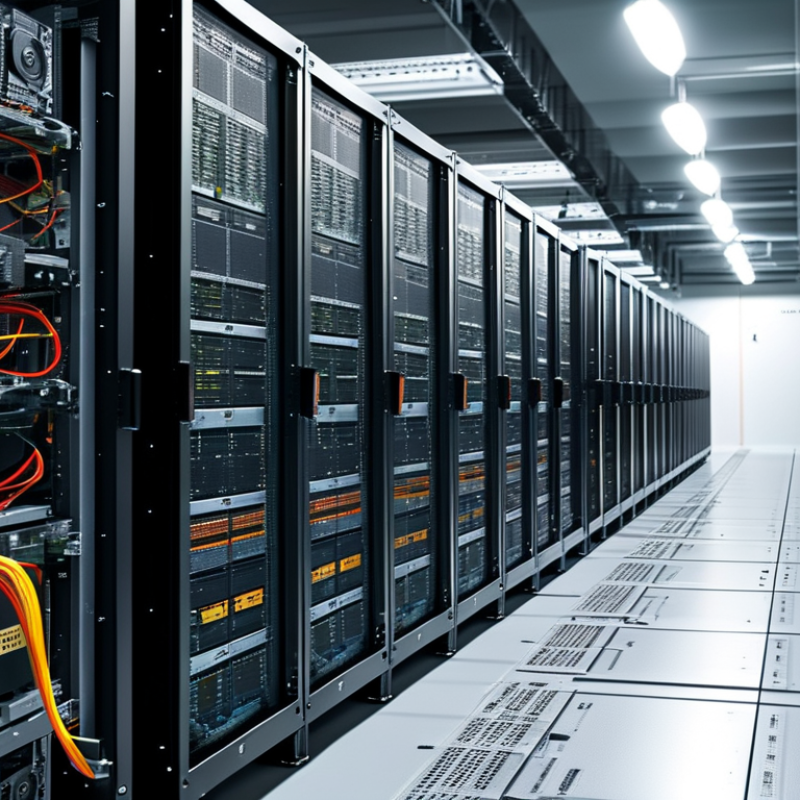
Why Choose the Best AI Server Manufacturer?
What Defines an AI Server Manufacturer
A serious AI server manufacturer does more than install powerful processors. It designs balanced systems for compute, memory, networking, storage, and cooling. In practical testing, engineers should measure GPU utilization, thermal stability, power draw, and recovery time. Stanford’s AI Index 2024 estimated GPT-4 training costs at about 78 million dollars. That figure shows why efficient infrastructure matters. Small design weaknesses can become expensive delays.
Reliability also separates experienced manufacturers from simple equipment suppliers. Uptime Institute’s 2024 Global Data Center Survey reported that serious outages can cost more than 100,000 dollars, with some exceeding one million. A trustworthy manufacturer provides burn-in testing, component traceability, firmware control, and clear service procedures. It should explain failure risks honestly. No checklist is perfect. I would still question any supplier promising unlimited performance without operating limits.
Tips: Ask for thermal test results, power curves, warranty response times, and documented compatibility. Request a pilot unit before large deployment. Check whether technicians can reproduce a fault under controlled conditions. Also review independent evidence, not only sales claims. A useful manufacturer discusses noise, rack density, airflow, and maintenance access. These details look ordinary. They often decide whether an AI cluster runs smoothly after six months.
A capable AI server begins with workload analysis, not a generic parts list. Engineers study model size, training duration, memory bandwidth, and expected user demand. They balance accelerators, processors, memory, storage, and networking. Small choices matter. A narrow cable path can restrict airflow.
Thermal design receives constant attention. Engineers map heat around processors and accelerators using sensors, simulations, and physical prototypes. They select fans, heat sinks, power supplies, and chassis layouts for sustained workloads. A server performing well for five minutes is not enough. It must remain stable overnight inside a crowded rack. Acoustic limits and energy use also influence the design.
Manufacturing adds another layer of discipline. Technicians inspect boards, update firmware, verify cable connections, and test systems under controlled loads. Burn-in testing can expose unstable memory or weak cooling before shipment. Quality records should connect each unit to its test results. No design is flawless. Early prototypes may reveal vibration, uneven airflow, or software compatibility issues. Reliable manufacturers document these findings and improve the process. They also provide clear service procedures, spare-part planning, and realistic performance data. This transparency helps buyers judge whether a system fits their workload, facility, and operating budget.
Why Choose the Best AI Server Manufacturer?
Which Technical Features Matter in AI Server Selection
Choosing the best AI server manufacturer starts with technical fit, not a polished product sheet. In real deployments, GPU density matters only when power, cooling, and airflow can support it. A compact chassis may look efficient, yet thermal throttling can erase expected performance during long training runs. Ask for sustained benchmark results, not peak numbers. Short tests can flatter weak designs.
Memory capacity and bandwidth should match model size, batch strategy, and inference latency targets. High-speed GPU interconnects reduce communication delays when several accelerators work together. PCIe generation, topology, and switch design also deserve close inspection. Network speed matters during distributed training. So does storage. NVMe tiers, RAID options, and direct data paths can prevent idle accelerators. I have seen teams overbuy compute and underbuy storage. That mistake is expensive.
Reliable selection includes remote management, firmware controls, telemetry, and clear failure alerts. Redundant power supplies help, but they do not replace tested maintenance procedures. Check rack depth, acoustic output, energy use, and cooling requirements before installation. Security features should include role-based access, secure boot, and update traceability. Ask how support handles replacement parts and diagnostic logs. The answer reveals operational maturity. One weakness remains: vendor benchmarks rarely mirror your data or code. Run a representative pilot with your own workload. Measure tokens per second, uptime, temperature, and total power. Then question the assumptions behind every result.
Which Technical Features Matter in AI Server Selection?
Why it matters: High-speed PCIe connectivity helps reduce data-transfer bottlenecks between GPUs, CPUs, storage devices, and network adapters. The figures show the theoretical unidirectional bandwidth of an x16 PCIe link across successive generations.
Reference values are rounded theoretical bandwidths based on PCIe specifications; real-world throughput depends on hardware, workload, protocol overhead, and system design.
Choosing the best AI server manufacturer requires more than comparing processor names. The real test is how each supplier supports demanding workloads in practice. Ask for benchmark results using your model size, dataset, and preferred framework. A server that excels in a public test may struggle with daily inference traffic. Request power readings, thermal data, and performance under sustained load. Details matter. Examine engineering experience, including rack design, accelerator integration, firmware tuning, and failure diagnosis. A credible manufacturer should explain trade-offs clearly, not promise unlimited performance.
Compare manufacturers through a consistent checklist. Review accelerator options, memory capacity, storage lanes, network speed, and expansion space. Then inspect service terms, spare-part availability, remote monitoring, and repair response times. Talk with technical staff before signing. Their answers reveal practical knowledge. Ask how they handle thermal throttling, mixed workloads, and failed components. Request references from organizations with similar uptime needs. Certifications and documented quality procedures can strengthen trust, but they do not replace hands-on evidence. I would also test a small pilot first. It may expose compatibility issues early.
Tips: Build a scoring sheet covering performance, energy use, support, security, and ownership cost. Weigh each category against your workload. Do not select the lowest quote automatically. Cheap hardware can become expensive during delayed repairs. Recheck every assumption. Experienced teams sometimes overlook noise, floor loading, or cooling capacity in the server room. Keep these findings in writing, and compare proposals line by line.
| Evaluation Dimension | What to Compare | Strong Capability Indicators | Why It Matters | Recommended Evidence |
|---|---|---|---|---|
| AI Accelerator Support | Supported GPU, CPU, and accelerator configurations; accelerator count per server; memory capacity. | Validated multi-accelerator designs, high-speed interconnect support, and sufficient PCIe lanes for the target workload. | Determines model-training performance, inference throughput, and upgrade flexibility. | Configuration guide, compatibility matrix, thermal test report, and workload benchmark results. |
| Compute and Memory Design | Processor generation, socket count, DDR5 support, memory channels, capacity, and error correction. | ECC memory, balanced CPU-to-accelerator architecture, high memory bandwidth, and support for large-memory workloads. | Reduces data-loading bottlenecks and improves performance for analytics, simulation, and large language models. | Technical specification sheet and independently reproducible benchmark methodology. |
| Networking and Interconnect | Network speed, fabric topology, latency, RDMA support, and scale-out capability. | 25/50/100/200/400 GbE options where required, low-latency fabric support, and validated multi-node scaling. | Fast interconnects are essential for distributed training and high-throughput data processing. | Cluster scaling results, network topology diagrams, and latency or bandwidth measurements. |
| Cooling and Power Efficiency | Maximum thermal design power, airflow design, liquid-cooling readiness, power supplies, and energy efficiency. | High-efficiency power supplies, redundant power options, hot-aisle compatibility, and liquid-cooling support for dense systems. | AI servers can consume several kilowatts per chassis; effective cooling protects performance and reliability. | Power measurements at idle and load, thermal test data, rack power planning, and cooling requirements. |
| Reliability and Availability | Component quality, redundant fans and power supplies, storage protection, firmware maturity, and failure recovery. | Hot-swappable components, ECC protection, remote health monitoring, validated firmware, and documented failure procedures. | Downtime can interrupt training jobs, delay deployment, and increase operational costs. | Reliability test records, mean-time-between-failure methodology, service logs, and warranty terms. |
| Manageability and Monitoring | Remote management, telemetry, firmware updates, inventory control, and integration with data-center tools. | Redfish-compatible management, role-based access, automated alerts, and fleet-level monitoring capabilities. | Centralized management lowers administration effort and shortens fault-diagnosis time. | Management interface demonstration, API documentation, alert examples, and update policy. |
| Security Features | Secure boot, firmware protection, hardware root of trust, data-at-rest protection, and access control. | Secure boot, signed firmware, TPM support, encrypted storage options, and documented vulnerability response. | Protects training data, model weights, credentials, and infrastructure from unauthorized access. | Security architecture, patching SLA, vulnerability disclosure process, and compliance documentation. |
| Scalability and Standardization | Node expansion, rack compatibility, storage growth, configuration consistency, and supply continuity. | Repeatable configurations, multi-node validation, standard rack dimensions, and a documented product roadmap. | A standardized platform simplifies deployment, procurement, maintenance, and future expansion. | Expansion plan, rack layout, bill of materials, lifecycle roadmap, and sample deployment schedule. |
| Software and Ecosystem Compatibility | Operating systems, virtualization, container platforms, AI frameworks, drivers, and orchestration tools. | Validated support for commonly used Linux distributions, containers, cluster schedulers, and major AI frameworks. | Reduces integration work and improves time to production. | Compatibility list, driver versions, installation guide, and proof-of-concept results. |
| Service and Support | Warranty length, response time, spare-parts availability, technical expertise, and global service coverage. | Defined service-level agreements, remote diagnosis, local replacement options, and lifecycle support. | Responsive support minimizes operational disruption and protects long-term investment. | Written SLA, escalation process, support contacts, spare-parts policy, and customer references. |
| Total Cost of Ownership | Purchase price, energy, cooling, software, support, maintenance, upgrades, and expected service life. | Transparent pricing, power-efficiency data, predictable maintenance costs, and upgradeable architecture. | The lowest purchase price may not provide the lowest cost per training job or inference request. | Three- to five-year TCO model using measured power, utilization, support, and replacement assumptions. |
| Compliance and Sustainability | Product safety, electromagnetic compatibility, environmental requirements, materials, packaging, and recycling practices. | Relevant safety and EMC documentation, energy reporting, responsible material management, and repairable designs. | Supports procurement requirements, regulatory compliance, and environmental objectives. | Declaration of conformity, test reports, environmental specifications, and sustainability documentation. |
Choosing an AI server manufacturer begins with evidence, not impressive specifications. Ask which workloads the system supports: model training, inference, simulation, or mixed use. Confirm GPU, CPU, memory, storage, and networking compatibility in writing. A server may look powerful yet throttle under sustained heat. Request thermal test results, power measurements, and noise levels from comparable configurations. Small details matter. Check rack dimensions, airflow direction, power redundancy, and remote management before purchase.
Evaluate the manufacturer’s engineering process, not only its product catalog. Can its team explain firmware updates, driver validation, and failure recovery clearly? Ask for documented burn-in procedures and acceptance tests using your expected workload. Reliable suppliers provide serial-level records, realistic delivery dates, and transparent component substitutions. Speak with current users if possible. Their maintenance experience may reveal weaknesses hidden in a sales demonstration. Review warranty response times, spare-part availability, technician coverage, and escalation channels. A low purchase price means little when one failed node interrupts a week of experiments.
Security and compliance also deserve practical questions. Request vulnerability-management policies, access controls, and secure update procedures. Avoid vague promises. Set measurable service levels for repairs, replacements, and technical support. A small pilot is wiser than a large commitment. Measure training throughput, job stability, energy use, and actual support response. I would not treat every published benchmark as final truth; lab conditions can flatter performance. Leave room for doubt, and document what still needs verification before signing.
It designs a balanced system for processors, accelerators, memory, networking, storage, and cooling. Powerful parts alone are not enough.
Engineers should measure accelerator utilization, temperature stability, power draw, and recovery time. Overnight testing matters. Short tests can mislead.
Heavy workloads create sustained heat inside crowded racks. Engineers use sensors, simulations, and prototypes to improve airflow and cooling.
Technicians inspect boards, update firmware, verify cables, and run controlled burn-in tests. These checks can reveal unstable memory or weak cooling.
Ask for thermal results, power curves, warranty response times, and compatibility records. Independent evidence deserves attention too.
A pilot unit tests performance inside the buyer’s actual facility. It can reveal noise, airflow limits, software conflicts, or maintenance problems.
It should explain component traceability, service procedures, spare-part planning, and realistic operating limits. Unlimited performance claims need careful questioning.
Rack density, cable paths, airflow, acoustic levels, and maintenance access all matter. Small design choices can create expensive delays.
No design is flawless. Early prototypes may expose vibration, uneven airflow, or compatibility issues. Honest documentation supports better decisions.
Choosing the best ai server manufacturer requires more than comparing prices or product specifications. A capable manufacturer combines engineering expertise, reliable component sourcing, thoughtful system architecture, and strict quality control to create servers that support demanding artificial intelligence workloads. Its design and production process should address high-density computing, efficient power delivery, advanced cooling, storage performance, networking, and long-term system stability.
When comparing manufacturers, evaluate their ability to provide suitable processors, accelerators, memory capacity, expansion options, security features, and management tools. It is also important to review customization capabilities, testing procedures, delivery reliability, technical support, maintenance services, and warranty coverage. Before making a decision, define your workload requirements, budget, deployment environment, scalability goals, and expected service life. A thorough assessment of both technical performance and business support will help organizations select a manufacturer that can deliver dependable AI infrastructure and adapt to future computing demands.
